
Saturday
06Feb2010

Superheroes

Ever since our boys were very young, my wife and I have subscribed to the Pacific Symphony's monthly children's concerts. What started as a well-intentioned effort to introduce our children to fine classical music has become a tradition in our home. Now that one son is off to college, another is soon to be on his way, and a third about to enter high school, we are one of the older families at the symphony on those first Saturday mornings of the month. I look around and see four- and five-year-olds taking their seat before the performance, and yet my sons never act as if the symphony is a vestige of childhood. The faces of the orchestra members have changed little over the years, and seeing them on stage is a constant in their lives. 

Each performance has a theme. Christmas, for example, is some variation on The Nutracker. This morning's theme was Superheroes. Movements from various Superhero-ish symphonies were performed, everything from Tchaikovsky's Romeo and Juliet Fantasy Overture to John Williams' themes from Star Wars and the March from Superman. You have to be there to know the majesty of such moments. To hear a full symphony orchestra tear into the Raiders of the Lost Ark theme is to know that old Neil Young axiom "Live Music is Better, Bumper Stickers Should Be Issued." I sit in our second-row seats and feel the pulse of the music hit my body. The complexity of each movement dazzles me, and so often I find my creativity stirred, causing me to reach for a notebook and pen so I can write down the thoughts about story ideas and plot points that suddenly ricochet around my brain pain. It is a children's symphony -- and yet it is not. On so many occasions over the years, the performances have moved me to tears. I sit there like a pile of mush, knowing quite well that I am sitting close enough for the orchestra to see this grown man crying. And I don't care. The music is beautiful, transcendent, powerful. 

Another highlight of this morning's show was not only the playing of Michael Daugherty's Metropolis Symphony, but the presence of the composer himself. Daugherty sat on stage, nodding to the music, and even closing his eyes and smiling at one passage. As a creative person, I marveled at such an opportunity. Writers don't often get the chance to see their work performed in front of an audience, and certainly not with the flair and spectacle of a live symphony. I found myself listening to the music, but watching Daugherty. I'll never have the opportunity he was enjoying, but I wasn't jealous. There's a wonderful moment in the writing process, when you read your final final polished draft before sending it to the publisher and know in your gut that you've done it right. That's what I was watching up there. 

During the final piece, Giachinno's credits piece from The Incredibles, the giant video screen behind the orchestra flashed drawings of superheroes that members of the audience had submitted prior to the show. They were childish and primitive, which is a redundant sentence. I saw Batman, Waterman, Spiderman, and a bunch of surely parent-influenced newcomers like Doctor Man. Most of the artists colored outside the jagged lines, which added to the charm. I had a flashback to childhood, and drawing stuff like that. I remember my Batman lunchbox and my GI Joe's. 

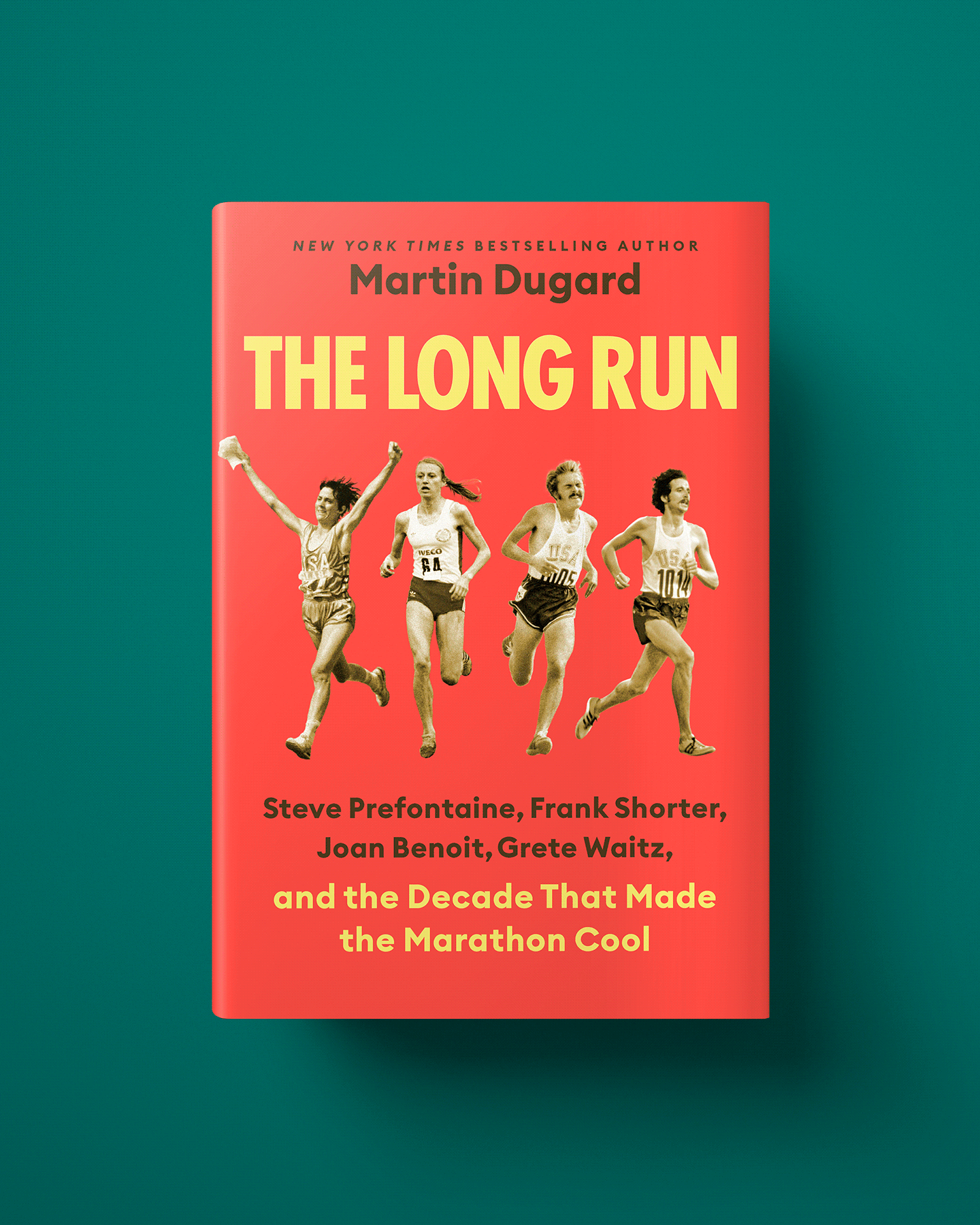
There's a reason for superheroes. As youngsters, they are the powerful, impervious images of ourselves we one day hope to become. They have muscles and wit and guile and sometimes invisibility. Women love them. As we get older, superheroes get replaced by just plain heroes. For me, it was Steve Prefontaine. To Pre, running was power and pride and gut, which spoke to me at a time in my life when I had none of that.

These heroes are also the versions of ourselves we someday hope to become, but a little more realistic, and thus more attainable. I had other heroes, people like Hunter S. Thompson, Ernest Hemingway and Bruce Springsteen. In their crafting of words and lyrics, I found inspiration to step outside my own middling way with words and give them a pulse and beat that caused them to rise up off the page. 

And then, inevitably, it happens. You find your own voice. I stepped on the backs of Hemingway and Thompson and even Pre to spin the words and build the attitude that became me. I no longer measured myself against them, because my path diverged at that point. My words and my running became deeply personal portayals of who I am, warts and all. Not super. Not always heroic. But better, day by day, mile by mile, word by word. I will never write like Ernest Hemingway. Never ramble like Thompson. Never run like Pre. That doesn't mean I can't kick a little ass in my own inimitable way. At some point we all need to jettison our heroes and become the person we're meant to be. 

I left the symphony supercharged. On the way home, Callie and I stopped at running store to buy new flats for Liam. The store was crowded, but I was happy to wait. Put me in a gear store and I'm as content as the proverbial barnyard pig. Within a few minutes, something started to bother me. It wasn't just the books and magazines they had for sale, which were connected by the common theme that running should be as mindless as possible. And it wasn't their store mascot, a snail. And it wasn't even the clerk who kept trying to push a brand of shoe that I considered substandard, but which I'm sure they overbought and needed to dump. 

It was just the whole mood. Which was this: Running is mundane. Running is assembly line. Running can be boiled down to a business plan. 

Now, you need to know this about me: running saved my life. Without running I would be dead somewhere. Just as Bruce Springsteen speaks of "the magic, the ministry, and the mystery of rock and roll," so I feel about running. It kept me sane when I was trying to find my way in life. It gave me a sense of self when all the world didn't seem to get me. It gave me peace on days when the world was chaos. It gave me glory as I crossed the finish line first. It gave me contentment, gave me connection, gave me catharsis. 

It made me feel, on those days when the sun hit me just right, like a superhero.

And now, running was just an act of commerce. To make matters worse, they sold Pre videos right next to books espousing mediocrity, status quo, and just good enough. 

I bought Liam a spectacular pair of ASICS and drove home in a snit. Calene kept looking at me as if I'd lost my mind. I'd gone from crying about superheroes and symphony composers to sniper-in-the-belfry within the span of 30 minutes. She is a wonderful woman who knows me well. These were her words: You need to go for a run. 

The recent rain in Southern California has been bruising. My trails are underwater and muddy. But I needed the solitude of the wilderness, so I set out during a lull in the storms. I sloshed through mud and water for four miles before breaking brush onto the local golf course. It's a little known fact that golf courses are the best place to run on a rainy day, because they're built for optimal drainage. So while the golfers themselves stayed home, I had the most perfect little cross-country course in Orange County all to myself. 

There's always that moment on an angry run day. It comes about four miles in. As I trotted down the 13th fairway, past three deer standing in the rough and eyeing me as if unsure whether I was friend or hunter, the moment hit. Here it was: I was the problem. The folks at the running store were just doing their jobs. They were selling shoes, and shirts and shorts and books and magazines and watches and socks and pretty much everything else to a group of people who were mostly non-runners. They were bored and irritable and tired of silly questions, just like any employee at any store. But they were handing out the keys to the kingdom. All those shoes and shirts and other stuff were the uniforms of superheroes. If I'd said it out loud in the store, people would have thought I was nuts. But when those same folks cross the finish line of their first marathon or half-marathon or 10k or any race that demands their very best, I guarantee you they will feel like a superhero. 

That's what running does to lives. It's not just exercise. It's not just achievement. It's a daily discipline that has nothing to do with speed, weight, social status, sexuality, political affiliation, where you live, or whether anyone anywhere loves you. It's about being the slow and painful process of being the best you can be. That's why the first step out the door is always so hard. That's when we choose between settling for average and being a superhero version of ourselves.

Some days, average wins. 

But man, when you go Superhero...

Thursday
04Feb2010

Catching Up

A number of you have written to ask about the status of WARRIOR, the motion picture I wrote and produced last year. And, since two of my stars are also in TWILIGHT (Kellan Lutz and Ashley Greene) I have been inundated with update requests from various teen fan clubs. So here's where we stand: WARRIOR finished shooting a year ago. We had some snags in post-production that delayed completion for too many months. Now, finally, we're getting the ball into the end zone. It is the first major motion picture about lacrosse, told through the eyes of a very troubled Kellan. We are finalizing talks with a major studio about distribution. When it will hit theaters is still up in the air, but good things are happening. Stay tuned, and thanks for asking. 

Onward. The Olympics start in a week. I'm pretending not to notice. It's not that I've chosen not to cover it in person (as with the Tour, you see a lot more on television than in person, and the mountain venues mean a multitude of logistical nightmares). It's that once they Olympics begin, they will steal my heart. I am already dreading that end-of-Olympic letdown when the torch is snuffed. I think of little else during the Olympics, and watch nothing else on television. I love getting immersed in those obscure sports like skeleton and luge, and the way we all become instant overnight experts on the players and nations involved. I even watch the figure skating, breaking my own hard and fast rule that a sport is not a sport when there are judges present. Competition should never be subjective. It will be wonderful while it lasts, and I'm sure we'll all have some very pronounced opinions on the inevitable glories and calamities soon to ensue. I will be rooting for my old hiking buddy Lindsey Vonn, as I will for my favorite train wreck, Bode Miller. In all, it will be wonderful. The Olympics always are. Then it will end, and my days and nights will lack the emotional highs and lows of watching athletes push to be their very best. I will no longer have anthem ceremonies to make me tear up. My nightly TV schedule will once again be that steady diet of CSI, 30 Rock, Survivor, Chuck, and Biggest Loser which allows my mind to quiet at the end of a busy day. 

So bring it on, Olympics. It will be glorious while it lasts. 

On a random note: I've formed a new running team. The San Juan Capistrano Track Club is a little something I threw together this winter. Right now it's just an avenue for younger athletes to improve between seasons, but I'm thinking of adding an age-group component if I can find a way to keep the obsessive-compulsives at bay. Just trying to keep it fun while making everyone fast.

Finally, this weekend marks the first ever California Indoor Track and Field Championships. Two of my guys are competing. It's too early to focus on speed and top-level racing, what with the outdoor championships starting four long months from today. But let's just say that winning is never a bad thing. Here's hoping that they kick some butt. 

Keep pushing... always


Monday
01Feb2010

Deep Thoughts

While perusing Flotrack this morning, I came across this piece on what we think of when we run. Nicely done, and serves best to define stuff we all inherently understand. "Associative" thinking is paying attention to our bodies during a run, while "Dissociative" is a preference for distraction. I recognize each sensation and connect them with a specific performance expectation. Take the other day, for instance. I went out running my team. We dropped down onto a trail that had recently been battered by the Biblical rains that thumped California over the past two weeks. This trail is one I have run more than any other in my entire life, so I know each twist and turn by heart. But the rain had caused tree branches to break off, entire trees to topple, and cut great gashes in this path. The grass along the trail, normally dead and dun, had broken into a green riot. Small rocks which had once been hidden by a layer of topsoil, now littered the ground like so many ankle-breaking obstacles. 

       These are all the things I noticed during the first two miles of our run. The pace was light and the physical act of running was incidental. My ears and eyes and ankles were the focus. I guess this is what it means to dissociate. Or, as I like to think of it, looking at the scenery.

         After those first two miles we raced some mountain bikers up a switchback, then I broke them into groups for a fartlek run - two minutes on, two minutes cruise, three minutes on, two minutes cruise, four minutes on, etc. Normally I'm an observer, but I've been trying to get myself back in shape lately. I've cut out a lot of the garbage from my diet, made a point of training in some fashion every day (running, mostly, but also a couple weight/plyo sessions at the House of Pain. I'm also giving serious thought to getting back on the bike), and have prepared for an upcoming few months of intensive writing by raising my level of fitness. So I thought it would be fun to jump into the fartlek session. "Fartlek" being Swedish for "speed play" it all sounded like a whole lot of fun. And it was. But it took everything I had to keep up with my runners. I was cognizant of each footfall, my arm angle, the pattern of my breathing. I kept track of each runner in front and to my side. I'd like to say there was someone behind me, but that would be a lie. I knew the pine-scented loop we'd be running, but had forgotten how impossibly far it was to the turnaround point. What had seemed like a short trot on an easy (dissociative) day, was actually more than a thousand meters. The grade, which once seemed so flat, was actually slightly uphill on the outbound portion and wonderfully downhill after we rounded the cinderblock public restroom and pushed back to the start, where we would do it all again. This, as Flotrack tells me, is associative running. I paid attention. I was in the moment -- so in the moment that time slowed down, expanding itself into the minutiae of running. The two minute rest periods, on the other hand, flew past in what felt like five seconds.  

     Racing feels like this, too, only with a higher level of focus and clarity. I know that some people like to dissociate during racing, to take their mind off the pain. But I'm so ADD (or ADHD, or whatever I am that makes me so easily distracted), that a moment's dissociation takes me to some other emotional place. Suddenly, the race seems unimportant. So I don't go there, because bad things happen when I do. At the Raid Gauloises in Ecuador a few years back I dissociated on the fourth day, while walking across an Andean plain. Within minutes, I was thinking of all the better ways I could be using my personal time. Out of nowhere I decided to quit the race. 

            This is dangerous territory. The Navy SEALs point out that once someone has made the decision to quit their basic training, there's no turning back. The mind has faltered long before the physical act of ringing the bell has taken place. What saved me in Ecuador was sharing this impulsive decision with a teammate. She reminded me that I was in no way fatigued or injured, merely bored by the scenery. In this way, I carried on. 

            OK. So we have associative and dissociative. But I would posit that there is another mental state comprising a little of both. It's the hyper-focus before the run, which carries over into the workout, so that it passes in such a blur that it's as if it never happened. Case in point: any day that my writing is going well. It's my habit to get the kids off to school, write for a couple hours to get the synapses firing, then go for a run to let all those new ideas percolate. Afterward, I'll head back into the office and write for three or four more hours. weaving all those endorphin-laced, highly oxygenated thoughts into the story or the book. My best writing -- or, let me say, my most fulfilling writing -- follows this process. I've got the basic idea, I add a little run, then I plunge back into the written word. No phone calls, no emails, no distractions. It's an introvert's dream. 

            Sometimes, however, I plunge too far into the psyche. These are my bunker days. I am so consumed by writing that I am transported to another time and place. I do not exist, other than as a vessel for whatever thought needs to flow onto the page. Only reluctantly, and perhaps out of obligation, will I break out for a run. 

            These are scary times. I am physically running, but my brain is still writing. These are the runs where I stand at a stoplight and run a hand across the drape of my running shorts, just to make sure I remembered to get properly dressed. These are the runs where I look back and forth two or three times before crossing the street, because in my mental condition I might actually forget why I'm looking both ways, and sprint out in front of a car. A run like this can last an hour. All the while I am associating in a monster way with writing, while apparently dissociating on my run. 

            Here's the weird part: the spell is broken if I run to the top of a hill. No lie. The whole way up will be a grind that will not register in the slightest, but once I stand atop Chiquita Ridge or the hill I like to call Falcon, or that spot on the Live Oak Trail where I have a 360 view of my world, I snap from my reverie. Very often I will pause to appreciate what I'm seeing. Sometimes I offer a short prayer of thanks for the tremendous beauty, or for my sudden lightness of being. Summits purify me. They let me see. It's no wonder that on the morning of my wedding I went for a run, and somehow found myself standing atop a hill. It just happens. 

            I don't know the clinical term for this hyper-focus, and then the loosening of one's cares and focus that occurs when all the world is laid before me in some glaring display of perspective and beauty. I don't want to know. 

            The mind-body continuum is one of the most overlooked aspects of running and life. To run is to think, whether we think we're thinking or not. 

Tuesday
26Jan2010

Posting

As many of you have noticed, I've been in the habit of either not writing or taking down each post one day later. The reasons are twofold. First, Winter Olympics notwithstanding, this time of year is slow in the endurance sports world. I thought it would be a good idea to keep in writing shape by starting each day with a new essay, so back in mid-December I made a list of thirty running-related ideas. They were all thoughts I'd had on running, or just life in general. These are the sorts of things that ramble around one's head during a workout. Some of them have taken up space for years. It seemed like a good time to put them out there, if only as rough drafts and half-complete thoughts. I had spent some time trying to put these into simple Word documents, but I found that by writing "live" so to speak, knowing that my words were headed straight toward a reading audience, I was less ponderous and more willing to take a few risks. I have to think that it is as close as a writer comes to performing a one-man show without actually taking the stage. It's fun. 

So much fun, in fact, that I actually started to take ownership of what I've been writing. The web is a curious place and the words I write from my little office in Southern California go all over the world, to all sorts of people. I wondered if someone might be of a mind to take an essay or two, then rewrite it with their name on it. Paranoid as that sounds, anything seems possible in this day and age. So I'd write a draft, post it for a day, then pull it back down and slip it into a Word document. The idea is that one of these days some of those essays might get some fine-tuning and become publishable. 

What struck me, however, is a curiosity about the web. My stats page shows me that readership is as strong as ever, but there's been little to no feedback on these pieces. The most comments I get on a daily basis, by the way, tend to be more controversial. If I say something snarky or praise the wrong person, more folks tend to weigh in. I think the nature of the web is that most of us don't post a comment unless we get really fired up. It's just the nature of the beast. In the world of the web, it's all about having an opinion. 

I digress. 

The lack of comments made me think that these essays, by and large, were either execrable or just plain mild. I am not sure which one I found more discouraging. And so while I knew that people were poking around on the site every day, I also had the feeling most of you were disappointed not to be getting a daily dose of Lance or the Tour or my feelings on the more boneheaded mediocrity in the running, riding and writing world. (Here's one for you: a prominent running magazine has a cover proclaiming something to the effect of: "Run Less, Train Slower, Race Faster." Could things be any more Lowest Common Denominator? Why bother running at all?). 

I never planned to stop posting, it just happened. The holidays ended, an intensive research period for a new project is upon me, and I sort of got in the habit of waving to my website every morning as I surfed past. Now, thanks to a great weekend of reading and outdoor fun in Mammoth, and that slap-in-the-mouth Susie B. so often delivers, I am back. I'm planning to start my day with a web warm-up at least three times a week. What I'd like to hear is some feedback on those essays. If you were reading, and maybe they struck a chord, I'd like to hear. See, I want to write more of them. They're fun. I think there's room in this world for running essays that don't have a breathy voice or start each sentence with a scientific training stat. Maybe I'm wrong. Let me know. 

And thanks for reading. 

Keep Pushing... Always


Tuesday
08Dec2009

A Review

Just finished "Born to Run" (the book) on my flight back from New York last night. The routing took us from JFK through San Francisco, with a driving headwind making the journey almost seven hours. So it was nice to have a book in my hands that didn't bore the living daylights out of me, or read so poorly that I wanted to hurl it against the bulkhead. This happens. Very often it happens with my own writing.

The core of the book is the Tarahumara Indians of Mexico, and their legendary distance running prowess. The author goes there to do a story, is smitten by their lifestyle, falls in with an outlaw ultra-runner who's planning an epic race pitting the Tarahumara against the modern world's best ultra racers, and then undertakes to be in the race himself. On the surface, a simple story, but the author writes it well, weaving in bits of running lore and research along the way. The characters were intriguing and the writing was good (there were spots where the writer's magazine journalism background showed itself, with snarky asides and cute sentences better suited to the trendy, go-go pages of Men's Health). The book moved along quite well. One of my habits when I'm traveling is to leave a finished book wherever I am when I turn the last page. This lightens my load and leaves a book for the next guy to come along. Only when something really catches my fancy do I hang on to it. This is one I kept. 

By the way, I should add that I felt somewhat validated to read that elite ultra-runners consider the Stunt Runner to be just that -- a man consumed by running-oriented stunts that cheapen the sport. I've never had my finger on the pulse of the ultra world, so that to find my sentiments mirrored actually felt quite nice. 

Here's what I didn't like about the book -- and this may be the same stuff that many of you did like, but bear with me. This takes us back to the snarky digs. I found it contemptible that someone new to running could so openly attack legends like Bill Bowerman and George Sheehan. He makes Bowerman sound like an addled moron, and Sheehan sound delusional. He makes Joe Vigil out to be a visionary (an observation with which I wholeheartedly agree), but also makes a point to say that Arthur Lydiard was a far better coach than Bowerman. This, while assailing Bowerman for not becoming a runner until he was in his 50's.

Look, that's just dumb, particularly from a newcomer to running. 

You've got to earn your bones in a sport before taking potshots at guys who dedicated their lives to it. And for what? To prove the uber-trendy theory that barefoot running is the best way to go? This not only takes us back to the sound-bite writing of Men's Health and other pithy, self-absorbed lad books, it shows a complete ignorance of running or simple stride mechanics. Watch an elite runner power down up a hill, or round the final corner toward home, and you will understand how beautiful and precise a stride can be. And I've yet to see one not wearing shoes. Running barefoot to optimize your stride and strengthen your feet is nothing new to top runners, but it's just one technique among many that includes stride drills, core strengthening, and lactate threshold sessions that will scorch your lungs but perfect your running economy.

So there's that. 

And of course there's the disparagement of short, fast running events, insinuating that triathlon and ultra-running are somehow more pure because they're longer. As someone who's done ultras, long triathlons, marathons, and events as short as 800 meters, I can tell you there's no suffering like the kind of punishment you put your body through in a fast two-mile track race. 

What we need, actually, is a book that doesn't trumpet the longer-is-better school of self-actualization (though, you will admit that a guy who wrote "Surviving the Toughest Race on Earth" doesn't have much of a leg to stand on there. Let's just say I got that out of my system), but appreciates the beauty of endurance racing in all its guises without being threatened by the others. 

Keep Pushing... Always